
Top 5 Ways to Calculate Calories Burned During Exercise
- Share on
Ask ten people how many calories their workout burned and you'll get ten different numbers. The gap matters: if your estimate is off by 200 calories a session, your weekly maths quietly falls apart. Here are five methods worth knowing, ranked from simple arithmetic to machine learning, along with how accurate each one really is.
1. The MET formula (the pen-and-paper method)
MET stands for Metabolic Equivalent of Task. Sitting still is 1 MET; brisk walking is about 3.5; running eight-minute miles is closer to 13. The calculation is:
Calories = MET × 3.5 × body weight (kg) ÷ 200 × minutes
The Compendium of Physical Activities lists MET values for hundreds of activities for free. It's fast and needs no hardware. The weakness is that MET values describe an average person, so fitness level, technique and terrain vanish from the equation.
2. Heart rate equations
Heart rate is a live signal of effort, which makes it a better proxy than a lookup table. Formulas such as the Keytel equation feed in heart rate, age, weight and sex to estimate expenditure minute by minute. Add a VO2 max figure and accuracy improves further.
This method shines for steady-state cardio. It struggles with strength training, where heart rate spikes from muscular strain rather than aerobic demand, and with caffeine, heat or stress, all of which push your pulse up without burning extra fuel.
3. Wearables and fitness trackers
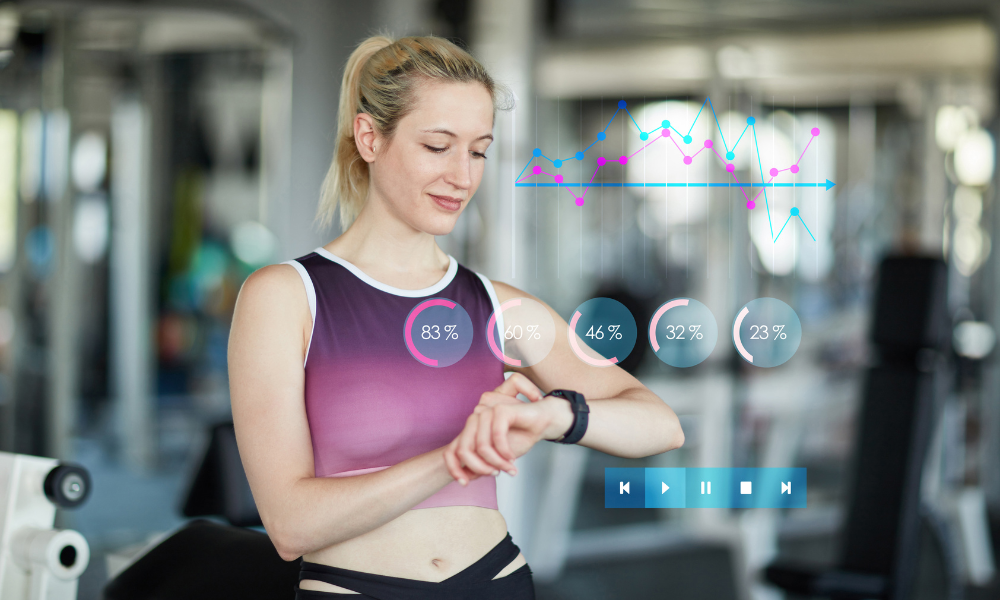
Modern watches and straps fuse several inputs at once: optical heart rate, accelerometer data, GPS pace and elevation, skin temperature and your stored profile. Chest straps remain more reliable than wrist sensors for heart rate, particularly during intervals.
Independent testing generally finds wearables reasonable at tracking heart rate but noticeably less consistent at converting that into calories, with errors often in the 20–30% range. Treat the number as a trend line, not a receipt.
4. AI-powered estimation apps
This is where the field is moving. Machine learning models trained on large datasets can personalise estimates instead of applying one formula to everybody. Some apps use computer vision and pose estimation to watch a lift or a yoga flow through your phone camera and infer intensity from movement quality. Others learn your individual patterns over weeks and correct their own drift.
The upside is genuine personalisation. The caveat is that a model is only as honest as its training data, and few consumer apps publish validation studies.
5. Indirect calorimetry (the laboratory standard)
Wear a mask, breathe into an analyser, and the machine measures oxygen consumed and carbon dioxide produced. Because energy production is chemically tied to gas exchange, this yields the closest thing to a true number, typically within a few percent. Sports labs, universities and some clinics offer it. It's the benchmark every other method is judged against.
Which should you use?
For everyday training, pair a wearable with the MET formula as a sanity check. If precision genuinely matters, book one lab test and use it to calibrate everything else.
For Membership Enquiry Click Here
- Share on